Good Questions.
Real questions about AI, answered by our characters. Warm, curious, conversational.

What AI slang do I actually need to know?
You need a short list of AI words, not a whole dialect. Learn prompt, hallucination, slop, LLM, deepfake, and agent. Let the rest wait.

You shouldn't have to learn Spark vs Chat vs Cowork to send an email
AI apps keep asking ordinary people to choose between Spark, Daily Brief, Chat, Work, and Cowork. The app should do that homework.
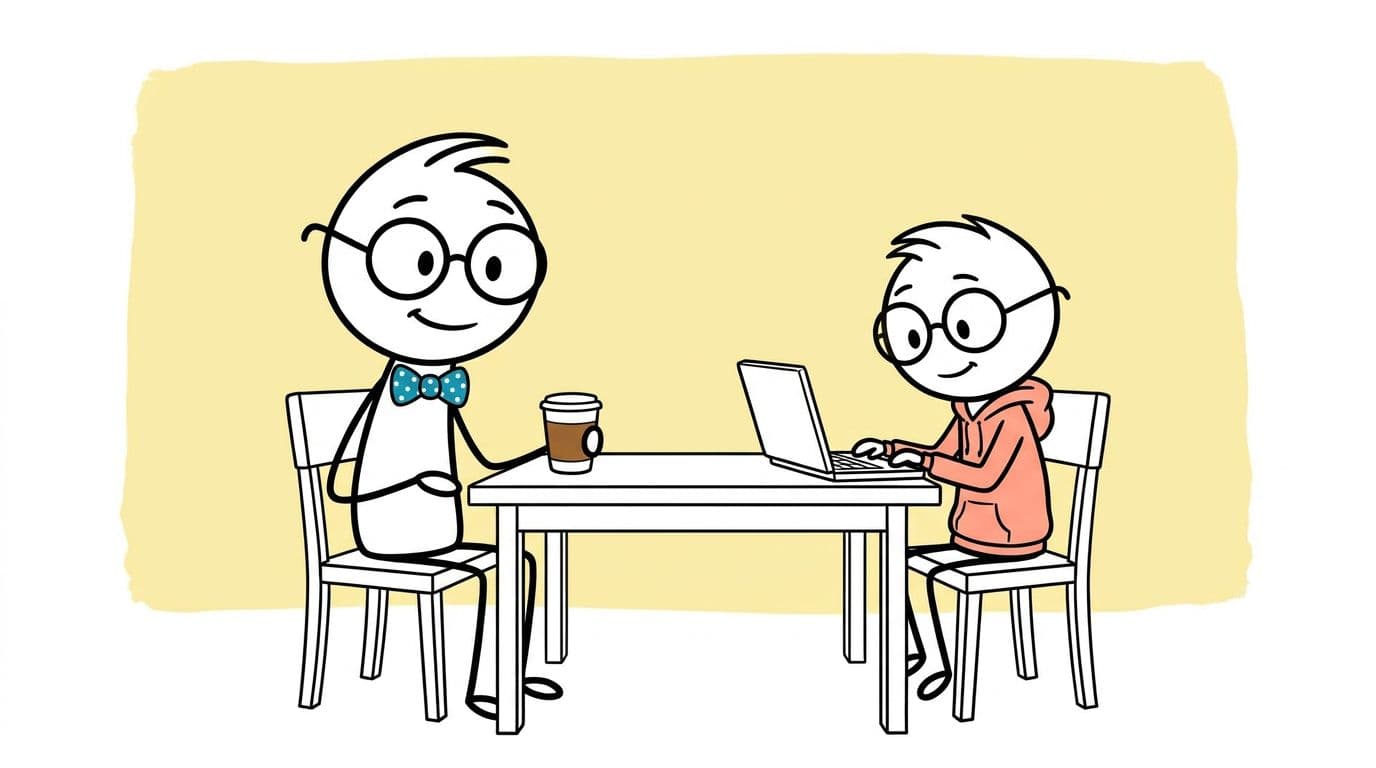
When is my kid allowed to use AI on homework?
If the homework is unlabeled, treat it as red. Yellow only when a teacher names the tools. A kitchen-table rule for tonight.
How to write a social post that sounds like you
A social post sounds like you when you draft the real sentence first. Use AI to tighten, not invent. Here's the order that keeps your voice.

Are highly educated workers the ones most exposed to AI job changes?
California data found stronger AI-exposure layoff signals among college-educated workers, not a broad statewide jobs panic.

Why calling AI agents your 'coworkers' can backfire
Treating AI agents like coworkers sounds collaborative until oversight slips. The framing quietly changes who catches mistakes.

If AI helped me write it, is it still mine?
The Adventurer used AI to write a toast and now he's not sure it's his. It is. The reason why is more interesting than you'd expect.

What's the Actual Difference Between ChatGPT, Gemini, and Claude?
The Tinkerer opened all three up. They're more similar than the marketing suggests, and different in ways that actually matter.
Can AI Read My Emails Without Me Knowing?
Three people asked Kevin this week. The short answer is not secretly, and the nuance is worth two minutes of your time.

Is AI Going to Replace Writers, Doctors, and Lawyers?
Doctors, lawyers, writers. Is AI coming for them? The research says it's more complicated than the headlines. Here's the honest version.
Is It Too Late to Start Learning AI?
No, but "not too late" isn't the same as "no reason to hurry." Kevin gives the honest answer, not the cheerful one.

Do I Need to Pay for AI?
Most people paying $20 a month for AI could have stayed on the free plan a bit longer. Here's what's actually different, and when it matters.

Why Does AI Make Things Up, and Can I Actually Trust It?
AI tools make things up. It's called hallucination, and it's not a glitch. Here's what's actually happening and which tasks are genuinely safe.
AI can be easy. Plain English. No hype.
We curate what matters and nothing else. Plus a free printable prompt sheet when you subscribe.