“I had a grandmother ask me this week whether helping with ChatGPT on the science report counts as cheating. She didn't need a philosophy. She needed a color.”We re-read MIT Technology Review's August 24, 2026 case study of Cheshire Academy, checked the school's About page, and confirmed the 2026-27 handbook rule: unlabeled assignments default to red.
When is my kid allowed to use AI on homework?
If the homework is unlabeled, treat it as red. Green means the teacher said AI is part of the work. Yellow means the teacher named which tools are allowed and which are not. You do not need a district memo to start tonight. Silence is not a maybe, and it is not yellow.
The hard part is not the colors. Most homework arrives unlabeled, the kid already has ChatGPT on a phone, and "helping" can mean anything from circling a misspelled word to pasting the whole prompt into a chatbot. A vibe is not a rule. A color is. Unlabeled work still needs one, and the honest household default is red until a teacher or a school policy says otherwise.
Cheshire Academy is a coeducational college-preparatory boarding and day school in Connecticut for grades 9 through 12 and postgraduate, with 395 students. On August 24, 2026, MIT Technology Review's Peter Hall reported that the school labels assignments like traffic lights. Green: AI is fully allowed. Red: none. Yellow: the teacher can permit some tools and ban the rest. The school's 2026-27 handbook says unlabeled assignments default to red. That last line is the one families actually need.
Miriam Przybyla-Baum, who teaches French there and has built up classroom materials across nearly thirty years, has students let a chatbot edit their homework, then decide which edits were right and which ones stole their voice. That is a teaching exercise she defined, not a permission slip to outsource the paragraph, and not a household yellow light you invent at 9 p.m. Asking a chatbot to write the five-paragraph essay on last summer's Yellowstone trip from a blank page is green only if the teacher said so. If the point of the assignment is their own sentences, it is red, and the chatbot does not get a vote.
One honest reaction: I am tired of waiting for a perfect district policy while the report is due at 8 a.m. Schools will keep arguing. The household still has to decide tonight. The decision, when nobody labeled the work, is red.
This is a household translation of one school's method as of September 2026, not a claim that your child's or grandchild's teacher uses these labels. Cheshire is a private school; at a public school, the rules may sit in a district AI policy, a class syllabus, or nowhere yet. Check the assignment sheet. If it is unlabeled, treat it as red unless the teacher or school policy says otherwise.
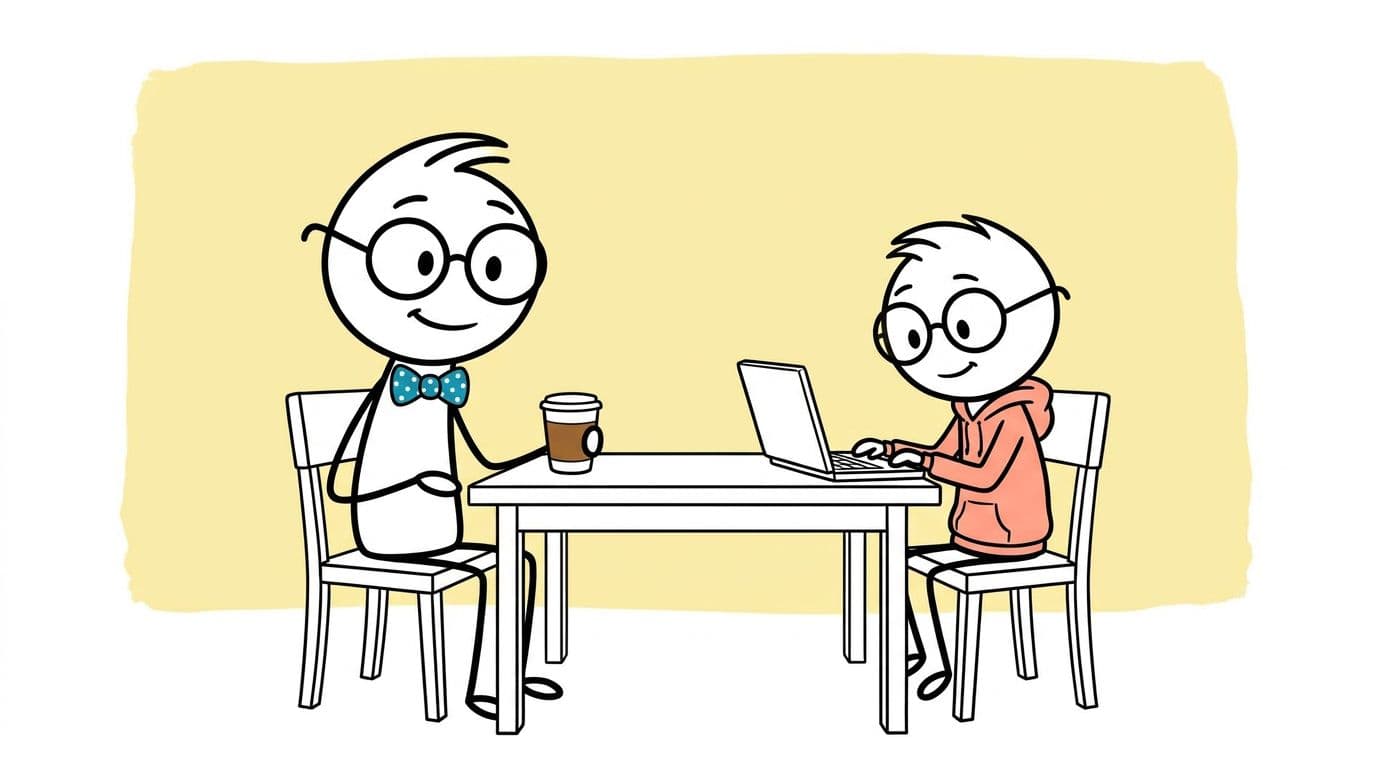
Where this lands in real life: The next time your kid slides that Yellowstone essay across the kitchen table, or a grandchild texts you a photo of it, due tomorrow, and asks whether they can use ChatGPT, answer with a color instead of a lecture. If the teacher never labeled it, treat it as red unless the teacher or school policy says otherwise. Yellow means the teacher has specifically defined which AI uses are allowed; green means the teacher said AI is part of the work. The honest answer is now a sentence you can say before anyone opens the app.
The useful household skill is not catching the chatbot. It is agreeing, before 9 p.m., which color tonight's assignment is.
Want to ask the school what its rules are? Our free printable has five calm questions to bring to a parents' evening or a note to the teacher, with room to write the answers: Five questions to ask your child's school about AI.
The next time your kid slides that Yellowstone essay across the table, or a grandchild texts you a photo of it, due tomorrow, answer with a color instead of a lecture: if it is unlabeled, treat it as red; yellow or green only when the teacher has defined what is allowed.
Ask what color this assignment is. If nobody labeled it, treat it as red unless the teacher or school policy says otherwise.
Questions people ask
What if the teacher never said anything about AI?
Then the assignment is unlabeled, not unrestricted. Treat it as red unless the teacher or school policy says otherwise. Yellow means the teacher has specifically defined which AI uses are allowed; silence from the school is not a green light.
Is spell-check the same as ChatGPT?
No. Those are different jobs, and yellow exists so a teacher can allow one without allowing the other. A spelling pass on a paragraph the student already wrote is closer to a dictionary. A chatbot that invents the paragraph, the examples, and the conclusion is doing the assignment. If the work is unlabeled, do not assume either one is allowed. If you cannot tell which one happened, ask the kid to explain the last sentence in their own words, with the screen closed.
Should I use ChatGPT myself to help them?
Only after you pick a color for your help, not just theirs, and only if that color is allowed. If you want a tool that will refuse to write the answer, the homework traffic-light helper in the Vault is built for that moment. This post is the other half: the rule you say out loud before anyone types.
Related
ChatGPT for Teens is live — and some under-18 accounts are already in it
OpenAI launched ChatGPT for Teens. The useful story for families is what changed by default, and which parental controls still require setup.
OpenAI released GPT-5.6 Sol. Here's what changes for everyday ChatGPT users
OpenAI's GPT-5.6 Sol, Terra, and Luna launch matters most as a model-picker map, not a reason to rebuild your AI habits.
The tools in this piece
- What ChatGPT actually does, and who it’s forThe tool that started the conversation, and still one of the best for almost anything you ask it to do.
- What Poe actually does, and who it’s forOne app, many chatbots. A simple way to try ChatGPT, Claude, and Gemini side by side without juggling separate logins.
- See what ChatGPT does with your data
- See what Poe does with your data